Your Plant Isn't Blind, It's Un-Coordinated
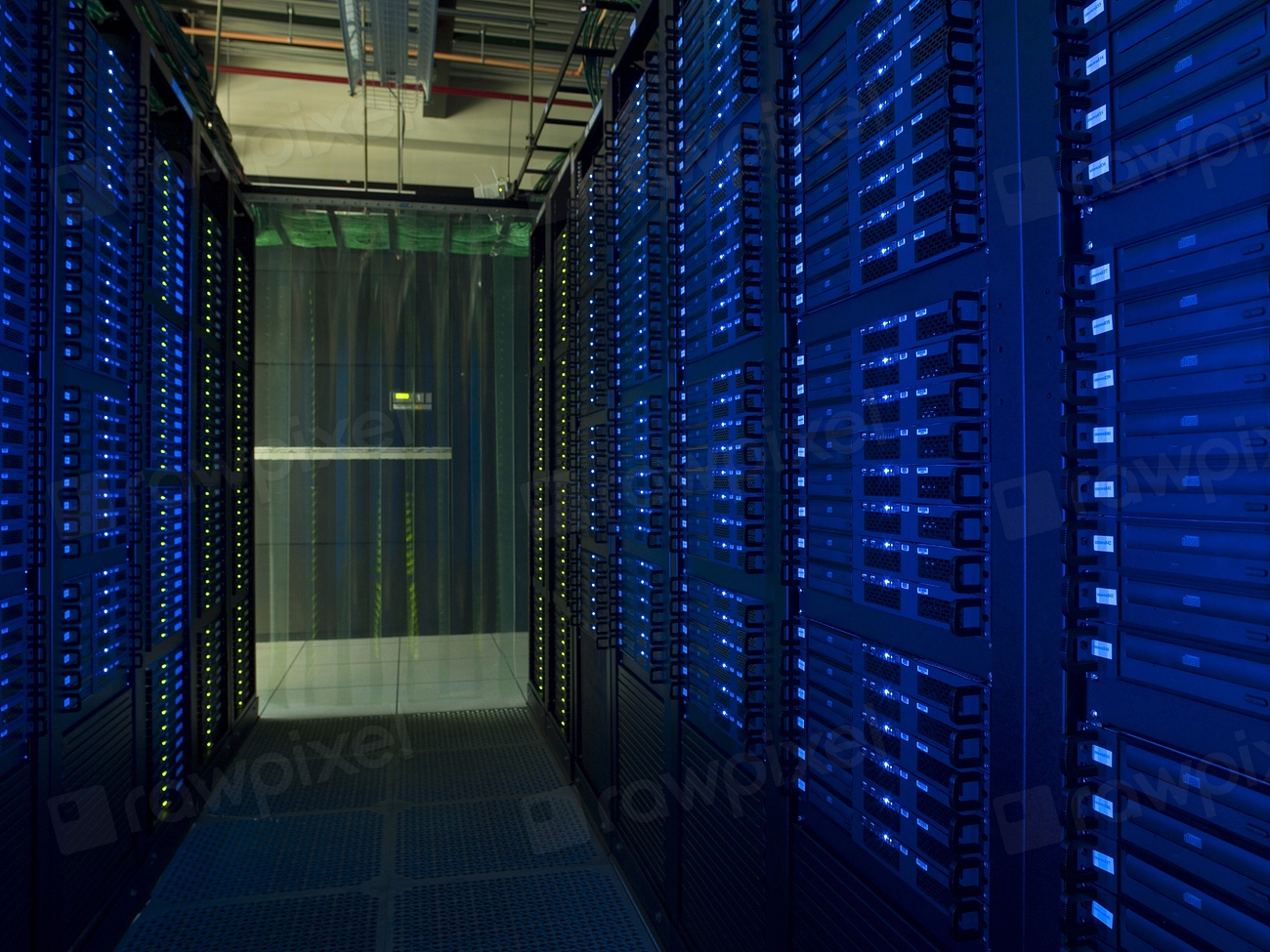
A modern plant collects more data than any generation of engineers could have dreamed of, and still ships the defect it had every signal to catch. The problem was never a lack of information. It was that no single thing was reading it all together and deciding what to do.
The lot that should never have shipped left the dock on a Thursday, and every piece of evidence needed to stop it was already sitting in a database on the plant network. The test system had logged a slow drift in a parametric reading across the last hours of the run — not a failure, just a trend edging toward spec. The historian had captured a humidity excursion in the cure area that lined up, almost to the minute, with the start of that drift. The MES held the genealogy tying the affected units back to a single upstream tool that had come off a maintenance cycle the day before. And the ERP knew this lot was earmarked for a customer whose contract carried the kind of penalty clause that turns a quality escape into a quarter's worth of margin. Four systems, four fragments of one coherent story, and not one of them was ever in the same room as the others. A person would have had to open four applications, know to correlate them, and happen to be looking on a Thursday afternoon to see it — and nobody was, so the lot shipped.
When the escape came back three weeks later, the postmortem called it a detection failure, which is the polite institutional way of saying nobody noticed. But that framing is wrong in a way that matters, because it points the plant at the wrong fix. The signals were all detected — every one of them captured, time-stamped, and stored, exactly as designed. What failed was the absence of anything capable of reading those detections against each other and understanding that together they meant something none of them meant alone. The plant was not blind; it saw everything. It simply had no faculty for turning what it saw into a single judgment and an action, and that is a different condition entirely — a more expensive one, because it means the plant paid to know and then paid again for not acting on what it knew.
The problem isn't missing data, it's that no one reads it together
For most of the last two decades, the animating belief of the smart-factory movement was that visibility was the constraint. If you could just instrument everything — more sensors, more telemetry, a historian logging every tag at sub-second resolution — the problems would become visible, and visible problems get solved. So plants instrumented everything, and the data arrived in a flood, and the flood revealed the actual constraint, which was never visibility at all. It was integration. The test system speaks its own language and stores its own truth. The MES holds the process context. The ERP holds the commercial context. The historian holds the physical context. Each was bought at a different time, from a different vendor, to solve a different department's problem, and each is exactly as authoritative as it is isolated. The truth about any given lot is smeared across all four, and the plant has no organ whose job is to assemble it.
This is what people mean, or should mean, when they talk about manufacturing data silos, and it is worth being precise about why the silos are so stubborn. They are not an accident of bad architecture that a better data lake would fix, because consolidating the storage does not consolidate the reasoning. You can pipe every one of those systems into a single warehouse and still have no answer to the only question that mattered on Thursday: given a parametric drift, and a humidity excursion, and a suspect tool, and a penalty-clause customer, all at once, what should happen next? A warehouse is a place where the fragments sit next to each other; it is not a thing that reads them. Putting the data in one location and putting the data to work are separate problems, and the industry has spent enormous sums on the first while quietly assuming it was the second.
The costs of leaving that second problem unsolved do not show up as a line item, which is exactly why they persist. They show up as the escape that reached the customer, the rework that traced back to a signal nobody connected, the unplanned stoppage a correlated reading would have anticipated. Those numbers are large even when you only see their shadow: a widely cited Fluke Reliability analysis found that unplanned downtime can cost a single large manufacturer as much as $207 million a year, and much of that toll is not the machine being down but the coordination failure that let it get there — the reading in one system that never met the context in another. The plant is not losing that money because it cannot see. It is losing it because seeing and understanding were never the same capability, and only the first had been bought.
Dashboards made the plant easier to watch, not better at deciding
The instinctive response to a plant drowning in disconnected data is to build a place where a human can look at all of it, and so the last decade produced an extraordinary proliferation of dashboards. The unified operations view, the single pane of glass, the control tower — each is a genuine improvement in how much a person can see at once, and each leaves the fundamental problem exactly where it was. A dashboard is a surface onto which the fragments are projected so that a human can do the correlating; it still requires that human to be present, to be looking, to know which four tiles to cross-reference, and to make the leap that the drift and the humidity and the tool and the customer add up to a decision. It moves the four applications into one screen, but it does not move the reasoning off the human, and the reasoning was always the part that failed at three in the afternoon on a busy Thursday.
It would be reasonable to assume the current wave of AI has finally closed this gap, and in most plants it has not — not because the technology cannot, but because most of what is sold as a fix still lives on the watching side of the line. Gartner has predicted that more than forty percent of agentic AI projects will be canceled by the end of 2027, and among the causes it names is "agent washing," the practice of relabeling an alerting rule or a chatbot as an autonomous agent without changing what it does. An anomaly detector that surfaces the parametric drift is still, underneath, a more sophisticated dashboard: it notices one fragment more loudly, then waits for a person to gather the other three and decide. It has automated a piece of the seeing and left all of the coordinating precisely where it was, which means it cannot, even in principle, have stopped Thursday's lot.
Closing the gap requires something categorically different: not a tool that highlights one signal for a human to investigate, but a system that reads the test system and the MES and the ERP and the historian as one continuous field of evidence, reasons about what their combination means against the plant's own history and policies, decides what should follow, and does it — holding the suspect lot, pulling the tool's maintenance record, checking the customer commitment — pausing for a person only when the decision genuinely belongs to one. A fixed workflow can only correlate the signals its designer thought to wire together, and the escape that costs a quarter is almost always the novel combination nobody drew a rule for. What the plant needs is not another feed into another dashboard, but something that can hold the whole picture at once and act on the pattern it was never explicitly told to look for.
Autonomy is the organ that assembles the truth and acts on it
What changes when that layer exists is not that the plant collects better data — it already had all the data it needed — but that the data finally has a reader. In a plant organized around a reasoning core coordinating specialist agents, one attending to each production stage but all drawing on a single shared view of the line, the Thursday story runs differently from its first minute. The parametric drift is not a lonely trend in the test logs; it is immediately joined to the humidity excursion the historian recorded, the tool genealogy the MES holds, and the commercial stakes the ERP carries, because the system reasoning over them treats those four sources as one body of evidence rather than four locked rooms. The lot is held before it reaches the dock, the containment is opened, and a two-line summary of why is waiting for the quality lead's approval — the escape that would have surfaced three weeks later at the customer simply never leaves the building. The gains this unlocks are the same ones the industry keeps glimpsing and missing; Deloitte has found that closing this loop with predictive, correlated action can reduce unplanned downtime by 30 to 50 percent and cut maintenance costs by 10 to 25 percent, and those numbers come not from a better sensor but from finally connecting the ones already installed.
This is the change a growing number of operators point at when they describe what it actually means for an enterprise to become autonomous: not a smarter place to look at the data, but an organ that assembles the scattered truth into a single judgment and takes the first action itself. It is the premise behind systems like StudioX's FactoryX, which runs specialist agents across the stages of the line — planning, yield analysis, test, binning, rework, quality gates — over a shared reasoning layer that reads the MES, the test systems, and the ERP together, under an operating model its designers put simply as "you own the policy, the agents run the line," with human sign-off on the calls that touch allocation and customer commitments. The agents do not add a source of data the plant lacked; they read the sources it already had and was never reading in combination.
The reframing to carry out of Thursday is that the money a plant loses to its silos is not the price of ignorance but the price of un-coordination, and those are not the same bill. Ignorance you fix by collecting more, which most plants have already done to the point of saturation. Un-coordination you fix by building something that reads what you have collected as a whole and acts, which almost none have. The manufacturers who understand the difference will stop measuring their maturity by how much they can see and start measuring it by how little of what they see still waits on a person to connect — because the plant that already knew everything it needed on Thursday did not need better eyes. It needed the one thing it had never been given: something to do the knowing, and then the doing, before the lot reached the dock.
Discussion
No comments yet — start the conversation.