The Work Order That Wrote Itself at 4am
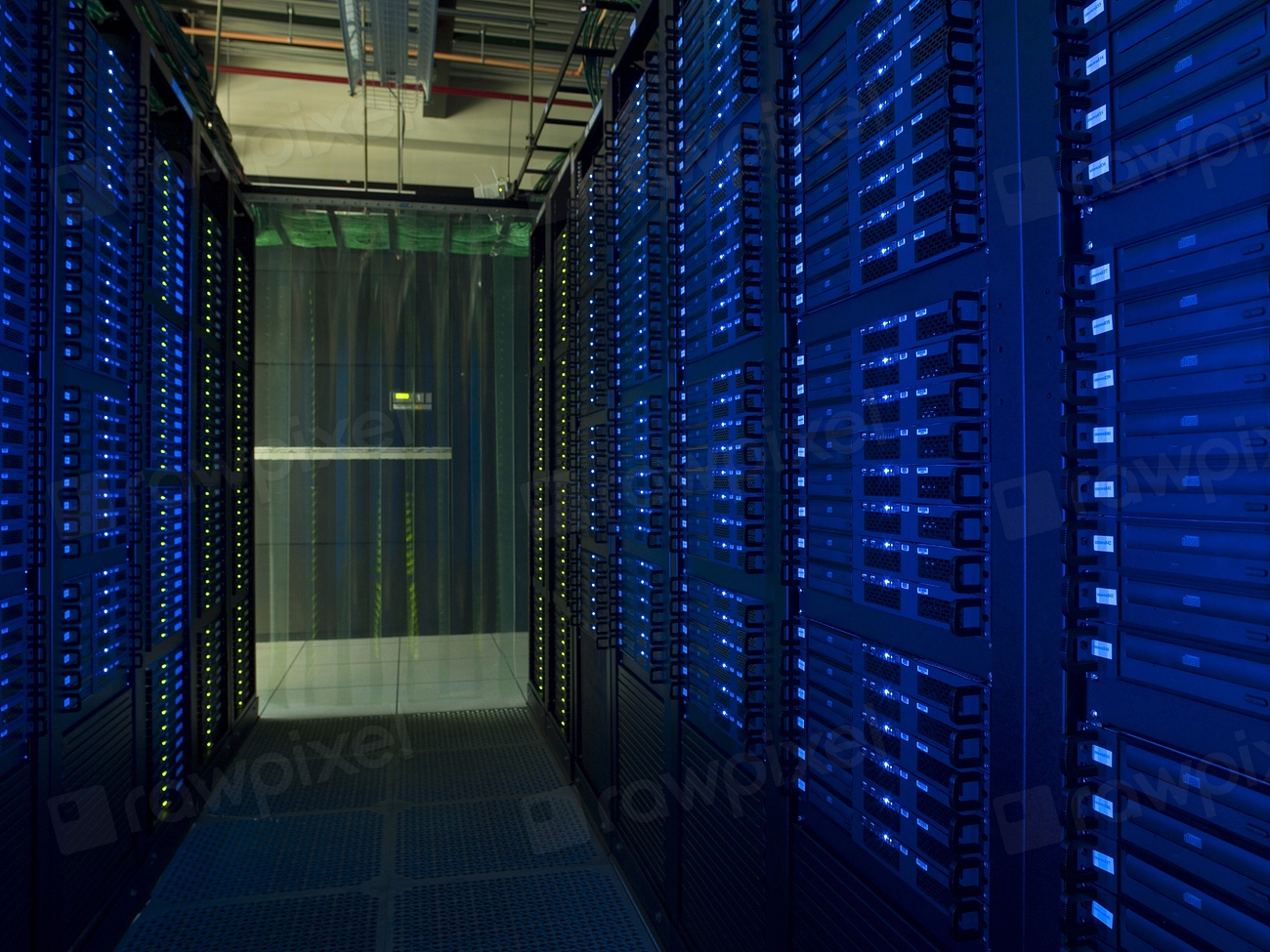
A plant reveals what it truly is in the hours nobody is watching. The fault that arrives at four in the morning is a test not of whether the machine can notice, but of whether anything can finish the response before the first shift walks in.
At four minutes past four in the morning, a temperature sensor on a gearbox in the packaging hall crosses a threshold it has crossed before, but this time the slope is wrong. The reading is climbing faster than heat alone would explain, and the pattern matches a signature the plant has seen twice in the last three years, both times a lubrication fault that ended in a seized shaft. There is no one on the floor. In the version of this plant that most manufacturers actually run, the reading lands in a historian, an alert queues in a system nobody is logged into, and the fault sits in a holding pattern until a maintenance planner opens their laptop at seven and begins the slow human work of figuring out what the alarm meant, whether a part is on the shelf, and which technician can be spared to look. By the time any of that resolves, the plant has lost the three hours in which the problem was cheapest to fix, and it has lost them for the most ordinary reason imaginable, which is that the people who could act were asleep.
Now imagine the same four o'clock, run differently. The temperature slope trips the same threshold, but instead of queuing, it opens a case. Something reads the curve against the gearbox's own history, retrieves the two prior lubrication failures and how they were resolved, cross-references the maintenance log to confirm the unit is overdue for service, checks the part against inventory and finds a seal kit two aisles away, reserves it, and drafts a work order with the diagnosis, the parts list, and a proposed window that slots into the scheduled changeover at ten so the line never stops on its account. By half past four the work order is written. By five it is sitting in the shift lead's queue as a two-line summary awaiting a single approval. The fault that would have cost a shift has become a task that costs twenty minutes of planned maintenance, and the difference was not a better sensor. It was that the response ran to completion while the floor was empty.
The unit of a real response is a finished work order, not an alert
The industry has spent a decade getting very good at the first move and almost no better at the rest of the sequence. We instrument everything, we stream the readings into dashboards, we tune the thresholds, and all of that produces a plant that is superb at noticing and helpless at responding without a person present to carry the response forward. An alert is not a response. It is the announcement that a response is now required, and everything expensive happens in the distance between that announcement and the moment the fault is actually resolved — the diagnosis that has to be reasoned out, the part that has to be found and reserved, the schedule that has to be respected, the work order that has to be written and routed to someone who can do the work. When people describe a plant as "smart" because it flagged a bearing before it failed, they are praising the cheapest and most solved part of the whole problem while the costly part, the coordination that turns a flag into a fix, still waits for daylight and a human to start it by hand.
This is why the scale of the losses is so stubborn even in heavily instrumented plants. A widely cited Fluke Reliability analysis found that unplanned downtime can cost large manufacturers up to $207 million a year at a single operation, and the reason that number survives every new sensor rollout is that the sensors improved detection without touching the response. The plant already knew. What it lacked was anything that could take what it knew and drive it all the way to a scheduled, parts-backed, approvable work order without waiting for a person to arrive and connect the fragments. Autonomous maintenance work orders are the point where the value actually lands, because a work order is a response that has been made complete — diagnosed, resourced, scheduled, and ready to execute — and completeness is the thing that no alert, however early, has ever delivered on its own.
The loop is not closed until the plant checks its own work
There is a temptation to treat this as a story about speed, as though the whole trick were to make the response happen faster in the dark, and speed is real but it is not the deepest part. The deepest part is that a genuine response is a loop and not a line, and a loop has an ending that most automation never reaches. Sensing the fault is the first move, deciding what it means and what to do about it is the second, and acting — reserving the part, writing the order, proposing the window — is the third, but none of that is worth much if nothing ever confirms that the action worked. After the seal kit goes in and the gearbox comes back online, something has to watch the temperature curve return to its normal band, verify that the fault signature has actually cleared rather than merely paused, close the work order against a real outcome, and write the result back into the history so the next four o'clock is diagnosed against a slightly wiser plant. Sense, decide, act, verify — the fourth step is the one that separates a response from a hopeful guess, and it is precisely the step that a person, arriving hours later to a stack of resolved-looking alarms, almost never has time to perform.
Most of what gets sold as the fix stops short of that loop, and the analysts have started to say so plainly. Gartner has predicted that over forty percent of agentic AI projects will be canceled by the end of 2027, naming among the causes what it calls "agent washing" — older tools, rule engines and alerting systems and dashboards, relabeled as autonomous without any real change in what they can carry through on their own. A rule that fires a notification has automated the sensing and nothing else; it decides nothing, reserves nothing, verifies nothing, and it hands the entire remaining loop back to a human the moment the moment matters. Closing the loop requires a system that can reason about an unfamiliar fault against the plant's own history and policies, act within the constraints of the production schedule, and then check that its action produced the outcome it intended, stopping to put a decision in front of a person only where judgment genuinely belongs — the commitment of a maintenance window, the trade against a customer order — rather than at every mechanical step in between.
Autonomy is measured in the hours no one is watching
The reason to care about all of this is that it changes what the plant is capable of during exactly the hours when it has always been least capable. In a plant built on dashboards, the empty overnight floor is a floor where problems accumulate and wait; the plant's ability to respond is gated entirely by whether a human happens to be present and looking. In a plant built on a reasoning core coordinating specialist agents — one attending to each production stage, all sharing a single live view of the line and its history — the empty floor stops being inert, and four in the morning stops being the plant's most dangerous hour and becomes an ordinary one. This is what a growing number of operators mean when they talk about the shift toward autonomous operations: not a louder alarm, but an operation that owns the entire distance from a deviation to a verified fix, and owns it whether or not anyone is awake to supervise. Deloitte's own analysis suggests how much is recoverable when that distance is actually closed rather than merely instrumented, finding that predictive maintenance can reduce unplanned downtime by 30 to 50 percent and cut maintenance costs by 10 to 25 percent — gains that come not from seeing sooner but from responding completely.
This is the thesis behind platforms like StudioX's FactoryX, which runs specialist agents across the production line under a single reasoning core, integrating the MES, the test systems, and the ERP so that a fault detected at one stage can be diagnosed, resourced, and scheduled against the state of the whole line rather than a single machine's readout. The operating model its designers describe — "you own the policy, the agents run the line" — is what keeps the human at the decisions that warrant one, the sign-off on a maintenance window or an allocation trade, while the agents carry the loop the rest of the way, from the four o'clock signature to the reserved part to the drafted order to the verification that the fix held. The agents do not replace the shift lead's judgment when they arrive at five to approve the overnight work. They simply make sure there is a finished, checkable decision waiting for that judgment instead of a pile of raw alarms and a lost head start.
The reframing worth carrying out of this is that the true measure of an autonomous plant is not how quickly it can notice a problem, because noticing has been solved for years and it was never where the money went. The measure is what the plant accomplishes in the hours no one is watching — whether a fault that arrives in the dark becomes a diagnosed cause, a reserved part, a scheduled work order, and a verified repair by the time the first shift walks in, or whether it becomes, as it still does almost everywhere, a three-hour head start handed silently back to the failure. A plant that can close that loop while the floor is empty is not merely faster than one that cannot. It is a fundamentally different kind of operation, because the losses that define manufacturing were always the ones that happened while no one was there to stop them, and it is the first plant that never needed anyone to be.
Discussion
No comments yet — start the conversation.