Per-Server Authentication for Enterprise MCP
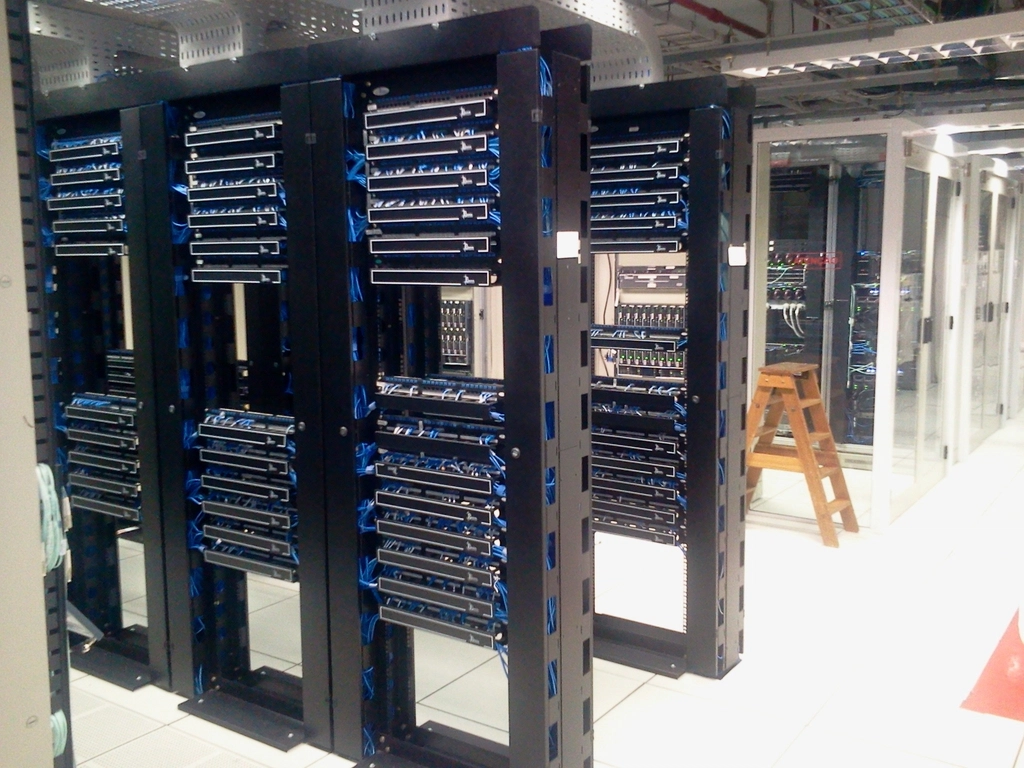
The value of an autonomous worker is measured by how many systems it can reach. The risk is measured by exactly the same number — and almost nobody is pricing that second figure into the architecture.
A single request arrives in an autonomous system — reconcile this month's flagged invoices — and within a few seconds the work fans out across a landscape that no human would touch that quickly. The agent pulls the invoice records from the ERP, cross-references a payment ledger in a separate finance platform, checks a vendor's status against the CRM, opens a ticket in the service desk for the three exceptions it can't resolve, and writes a summary back to a shared workspace. Each of those five touches crossed a boundary into a different system, and each one required a credential — a token, a key, a secret that proved the agent was allowed through the door. The whole thing finished before anyone looked up, and it worked precisely because the agent could reach all five systems at once. That reach is the entire point. It is also, if you look at it from the other direction, the entire problem.
Because the same property that makes an autonomous worker valuable — that it can connect to dozens or hundreds of enterprise systems and act across all of them — is the property that makes it dangerous the moment any single one of those connections is compromised. The industry has spent the last two years celebrating breadth, counting the integrations, treating the number of systems an agent can touch as the headline metric of how capable it is. Breadth is real and it matters. But an integration layer is not just a set of doors an agent can walk through; it is a set of keys the agent is now holding, and the security question that decides whether the whole architecture is sound or catastrophic is not how many doors there are. It is what happens when one of the keys gets stolen.
Breadth is an asset and a blast radius at the same time
For most of the history of enterprise integration, the answer to "how does this automated process reach all these systems" was a service account with broad, standing privileges — one identity, one set of credentials, trusted everywhere the process needed to go. It was the path of least resistance, and it worked well enough when the automated process was a nightly batch job that did the same three things in the same order every time. The credential concentration was a known quantity because the behavior was a known quantity. You could reason about a script because a script only ever did what it was written to do, and the broad privileges it held were dangerous only in the narrow sense that a bug might misuse them in a predictable way.
An autonomous worker breaks that comfort completely, because it does not follow a fixed path. It reasons about what to do next, chooses which systems to touch based on what it finds, and composes actions the designer never explicitly sequenced. That flexibility is the source of its value — it is what lets a single system handle the exception, the unanticipated case, the request that doesn't fit a template — and it is exactly what makes a concentrated, broadly-privileged credential the wrong foundation to build it on. If one identity holds the keys to the ERP and the payment platform and the CRM and the ticketing system all at once, then a single compromised tool call, a single prompt injection that hijacks the agent's intent, a single poisoned document that redirects its reasoning, does not stay contained to the one system it entered through. It inherits the whole keyring. The blast radius of the smallest failure is the sum of everything the agent was ever allowed to reach, and breadth — the very thing you were bragging about — becomes the precise measure of how much damage a single bad moment can do.
This is the security frontier that the shift to autonomous work has quietly moved into place, and it is not a hypothetical that lives in a threat-modeling deck. It is the structural consequence of giving a reasoning system real hands in real systems. The organizations that get this right will not be the ones with the longest list of integrations. They will be the ones who understood that credential handling — how each connection is authenticated, scoped, and constrained — is not plumbing beneath the interesting part of the platform. It is the interesting part.
Per-server authentication turns one keyring into many locked doors
The alternative to a concentrated credential is not fewer connections; it is connections that are individually scoped, individually authenticated, and individually revocable. Under a per-server authentication model, every system the agent reaches is its own trust boundary with its own credential, granted the narrowest set of permissions that the work actually requires and nothing more. The connection to the payment platform can move money within a defined limit and cannot read the CRM at all. The connection to the ticketing system can open and update tickets and has no path to the ledger. The read-only connection to the data warehouse is exactly that — read-only — no matter how the agent's reasoning wanders. Each door has its own lock, and holding the key to one tells you nothing about the others.
The difference this makes is not incremental, because it changes what a compromise can become. When credentials are concentrated, a single breach is a catastrophe by default; the attacker who subverts one tool call is standing in the middle of everything. When authentication is per-server and scoped, that same subverted call is trapped in a single room. It can do damage within the bounds of one narrowly-permissioned connection, which is a bounded and often recoverable event, and it cannot cascade into the systems it was never given a key to. The failure stays local. That containment is the whole game, because in a world of autonomous systems acting faster than anyone can watch, you cannot promise that nothing will ever go wrong — the honest security posture assumes something eventually will, and designs so that when it does, the damage is a room and not the building.
Scope is only half of it, though, and the other half is memory. A per-server model, done properly, makes every credentialed action legible after the fact: which agent used which credential to take which action against which system, at what time, under whose authority. That auditability is not a compliance checkbox bolted on at the end. It is what makes an autonomous system governable at all, because the only way to trust software that acts on its own across hundreds of systems is to be able to reconstruct, precisely and without gaps, everything it did. A concentrated credential produces a log that says "the service account touched everything," which is another way of saying it tells you nothing. A per-server architecture produces a record where every action is attributable to a specific, scoped, authenticated connection — and attribution is the precondition for both catching a problem and proving, to an auditor or a regulator or your own risk committee, that the boundaries held.
The integration layer is a security architecture wearing a convenience costume
It is tempting to treat all of this as a detail of implementation, the sort of thing you can defer until after the exciting capabilities are working, and that instinct is exactly why so many ambitious deployments stall. When Gartner predicted that over forty percent of agentic AI projects will be canceled by the end of 2027, the reasons it named were not only cost and murky value but inadequate risk controls — the projects that could not demonstrate that an autonomous system acting across the enterprise was contained, auditable, and safe to let run. The capability was often there. What was missing was a security model that a serious organization could sign off on, and that gap is where a great many pilots quietly go to die. The integration layer is where that model lives or fails, because it is the exact surface where a reasoning system stops being a conversation and starts being a set of privileged hands inside real systems.
This is why the emergence of the Model Context Protocol as a standard for how agents connect to tools is more consequential than it first appears, and why the security posture of that connection layer deserves as much scrutiny as its breadth. A protocol that standardizes how an autonomous worker reaches an external system also standardizes where authentication, scoping, and auditability get enforced, and that is the right place to enforce them — at the boundary of every server, per connection, rather than in a tangle of bespoke credentials scattered through application code. It is the principle behind how platforms like StudioX approach enterprise MCP: each connection authenticated on its own terms, scoped to the narrowest necessary permissions, logged as a discrete and attributable action, with human-in-the-loop gates wired into the connections that touch money, customer commitments, or anything else where a mistake is expensive. None of that is what sells the platform in a demo. All of it is what determines whether the platform survives contact with a security review, and it is a large part of what the move toward an autonomous enterprise actually requires beneath the capabilities everyone talks about. The breadth gets the attention; the security model of the breadth is what earns the deployment.
So the useful way to evaluate an integration layer is not the one the market has trained everyone to reach for. The number of systems an agent can connect to tells you what it can do on its best day, and that number will keep going up regardless of who builds the platform, because breadth is the easy part and it is getting easier. The number that actually distinguishes a sound architecture from a liability is the inverse one, the one that never makes it onto a slide: given a single compromised connection, how far can the damage travel before something stops it. Measure the integration layer by its blast radius, not its reach — by how much of the enterprise a stolen key can't touch — and the whole conversation about what makes an autonomous system safe to deploy stops being about how many doors you built and starts being about how many of them stay locked when one of them is kicked in.
Discussion
No comments yet — start the conversation.